Most men don’t wreck their lives with one catastrophic decision. They just keep repeating the same patterns, on autopilot, for decades, and one day wake up wondering how they followed every rule and still ended up exactly here.
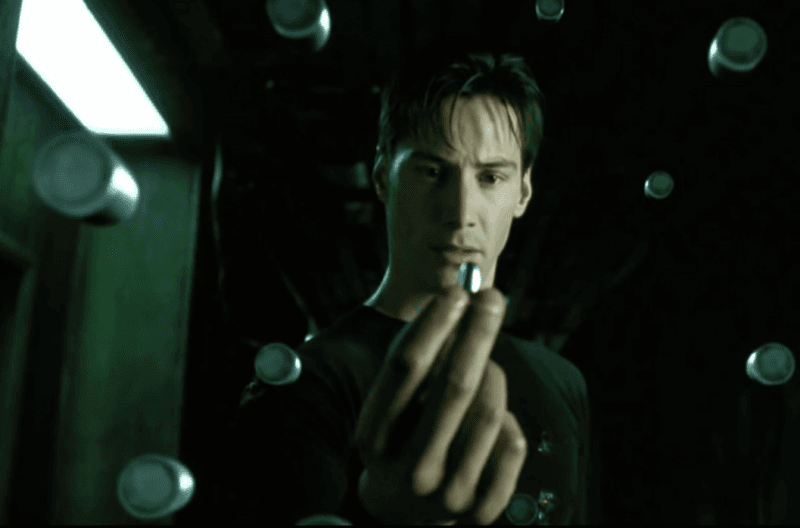
I was that man. And the night I finally saw it clearly, really saw it, I was unemployed, sitting alone with too much time and not enough answers, watching The Matrix.
Not the dramatic kind of unemployed. No rock bottom, no intervention, no neon sign from the universe. Just a man in his 40s staring at a ceiling, trying to figure out how he had done everything right and still ended up exactly here.
I went to school. Not right away, I drifted for a while first, the way a lot of us do when we’re young and following someone else’s map. But eventually I found something I genuinely loved, something I could build into a career that actually helped people. So I went. I got the degree.
I built a career. Then got laid off. Built it again. Got laid off again. Built it again. Got laid off a third time. Got fired once. Quit a job that was quietly killing me. So let’s call that a career, technically.
I got married. Got divorced. Got engaged again. Ended that too.
I bought a house. It was everything I thought I wanted, until it turned into the thing that owned me instead of the other way around.
I did the list. The whole list. Every checkbox society hands you when you’re young and tells you, Do these things and you will be happy. Go to school. Get the career. Find the partner. Buy the house. Build the life.
I did them. And I was sitting alone on a couch, wondering what went wrong.
Then I put on The Matrix.
When You’re Ready, You Won’t Have to
You know the scene. Neo is in training. He’s learning what the Matrix is, what he’s capable of, and what none of it actually means. And Morpheus looks at him and says:
“What are you trying to tell me? That I can dodge bullets?”
“No, Neo. I’m trying to tell you that when you’re ready, you won’t have to.”
I had seen that movie probably a dozen times. I knew that line. And that night it hit me differently, the way a song lyric suddenly means something completely new after a breakup, because now you have the experience to hold the words up against.
I wasn’t ready.
Not for the career. Not for the marriage. Not for the house. Not for any of it.
I had been doing things because that was what you did next, not because I had actually decided they were what I wanted. Not because I had examined what I believed about work, about relationships, about what success was supposed to feel like. I was running a program I had never consciously installed. Following a script I had never chosen to read.
And in that moment, watching Morpheus and Neo in a room that wasn’t real, I had the clearest thought I had ever had:
I am living inside my own matrix. And I built it myself.
The Behavioral Pattern Running Your Life (Without Your Permission)
Here is what I mean when I say the world is an algorithm.
Not that life is cold or mechanical. Not that human beings are robots or that love and loss and grief and joy are reducible to code. I’m not making that argument.
I’m making a different one.
I’m saying that most of what feels random in your life, the relationships that keep ending the same way, the opportunities that keep slipping through your hands, the emotional patterns that show up like old friends you never invited, none of it is random. It is patterned. And patterns, once you can see them, can be read.
An algorithm is just a set of rules that produces a predictable output from a given input. Feed it the same data, get the same result. Every time.
Your mind works the same way.
The experiences you had as a child became beliefs. Those beliefs became filters. Those filters became the lens through which you read every situation, every person, every opportunity that has ever walked into your life. You are not experiencing reality directly. You are experiencing your interpretation of reality, shaped by a program that was largely written before you were old enough to have an opinion about it.
That’s not philosophy. That’s neuroscience.
And here’s where it gets uncomfortable:
Most of us are running software we never agreed to install.
Why Men Keep Repeating the Same Patterns
Think about the last time you said something like this to yourself:
I always end up with the same type of person.
I was doing so well, and then I self-sabotaged. Again.
I don’t know why I keep attracting this kind of situation.
I must have bad luck.
That’s just how it goes for me.
I said every one of those things. Multiple times. About multiple situations. And each time I said them, I was doing something very human and very expensive, I was outsourcing the explanation to something outside myself. Luck. Fate. Chemistry. The universe. Bad timing.
What I wasn’t doing was looking at the only common denominator in every one of those situations.
Me.
Not self-blame. I want to be clear about that distinction because it matters. This isn’t about beating yourself up for the loops you’ve been running. You didn’t choose the original programming. Nobody handed you a manual at eight years old and said, “Here are the beliefs you’re about to form about love, about safety, about what you deserve, and about who gets to be happy, choose wisely.”
You absorbed it. From your parents, your environment, the things that happened to you, and the things you watched happen to the people around you. You built a model of how the world works from the evidence available to a child with no frame of reference.
And then you grew up and kept using that model.
That’s the loop. That’s the algorithm running in the background of every decision you’ve made since.
Why Chasing Happiness Keeps the Loop Running — and What to Seek Instead
Somewhere in that night of watching The Matrix and finally seeing my own patterns clearly, something else shifted.
I had spent my whole life chasing happiness. That was the goal, right? That was what the list was supposed to deliver. The career, the marriage, the house, happiness. And I kept catching it in small doses and losing it just as fast, then working harder to get it back, and losing it again.
That night I stopped wanting happiness.
I know how that sounds. But stay with me.
Happiness is a state. It responds to circumstances. When things are good, you feel it. When things aren’t, you don’t. You can’t sustain it because you can’t control everything that affects it. Chasing happiness is like trying to hold water in your hands, the tighter you grip, the faster it slips through your fingers.
What I realized I actually wanted, what I could see myself sustaining through the hard seasons, through the uncertainty, through the things I couldn’t control, was peace.
Peace doesn’t require the circumstances to be perfect. It doesn’t spike and crash with every win and loss. It’s not dependent on the algorithm of the external world running in your favor.
Peace is an inside condition.
And you can build it deliberately. Not by avoiding pain, not by getting everything you want, but by understanding the algorithm you’re running and making conscious choices about what you feed it.
I laughed when I landed on that thought. Genuinely laughed, the kind you don’t plan, the kind that comes from something clicking into place.
The world is an algorithm.
And I had been running mine on autopilot for 40-something years.
What Comes Next
This is the first post in a series built around the concept at the foundation of a book I’m writing.
The book is called The World Is an Algorithm: The Hidden Patterns Behind People, Power, Attraction, and Fate.
It goes deep. Shadow work. Behavioral patterns. Why you’re attracted to who you’re attracted to. What karma actually is when you strip the mysticism away. How social systems shape individual behavior in ways most people never examine. And most importantly, how you rewrite the algorithm you’ve been running when you finally decide you’re done with the output it keeps producing.
In Part 2 we’re going into patterns specifically, how they form, how they compound, and how to start reading your own before they read you.
If this landed anywhere near where you are right now, if you recognized yourself somewhere in that list of checkboxes, or in the loop, or in the chase for something that keeps moving, subscribe below. This conversation is just getting started.
One Question Before You Go
I want to leave you with the same question that stopped me cold that night on the couch.
Not as a journaling prompt. Not as homework. Just something to sit with.
Whose definition of a good life have you been living?
Not your parents’. Not society’s. Not the version you built from watching everyone else seem to have it figured out. Yours.
If the answer comes quickly and confidently, good. You’re already ahead.
If it doesn’t, if there’s a pause, a discomfort, a quiet voice somewhere that says “I’m not actually sure”… that pause is worth paying attention to.
That pause is the beginning of reading your own algorithm.
Part 2 is coming. We’re going into patterns, how they form before you’re old enough to question them, how they compound quietly for decades, and how you start to see them clearly enough to finally have a choice about whether you keep running them.
See you there.
Respectfully,
Billy
The Midlife Brotherhood