Health is Wealth.
There’s a phrase that gets thrown around in every gym, every LinkedIn post, every wellness influencer’s caption, and it’s starting to irk the hell out of me. “Health is wealth.”
I get the sentiment. Without your health, none of the rest of it matters much. But that’s not what wealth means, and blurring the two lets people off the hook in both directions. The guy with money tells himself he’s “wealthy” so he doesn’t have to deal with the blood pressure meds. The guy with no money tells himself he can’t be healthy because he can’t afford it. Both are wrong, both excuses come from the same sloppy thinking, and it’s really a question of why health is more important than wealth in the first place, not whether they’re the same thing.
Vitality Isn’t the Same Thing as Money
Health isn’t wealth. Health is vitality. It’s life itself, the engine that lets you go build wealth, spend it, enjoy it, and still be standing when your grandkids show up. Wealth is what vitality can buy you access to. It is not a substitute for it, and it never was.
What Twelve Years in a Luxury Health Club Taught Me
I spent twelve years as a member of one of those gyms. Not a country club, but close, the kind of place where you’re doing incline presses next to a guy whose net worth could buy the building. Trophy wives, actual celebrities, top-tier Only Fans models, a few names you’d recognize if I said them, which I won’t. Twelve years in that room taught me more about the real relationship between health and money than any article ever could.
Here’s what nobody tells you about that world: a lot of those men didn’t start out fit. They got fit after the money showed up, once it scared them enough to.
The Bezos Transformation Nobody Explains Correctly
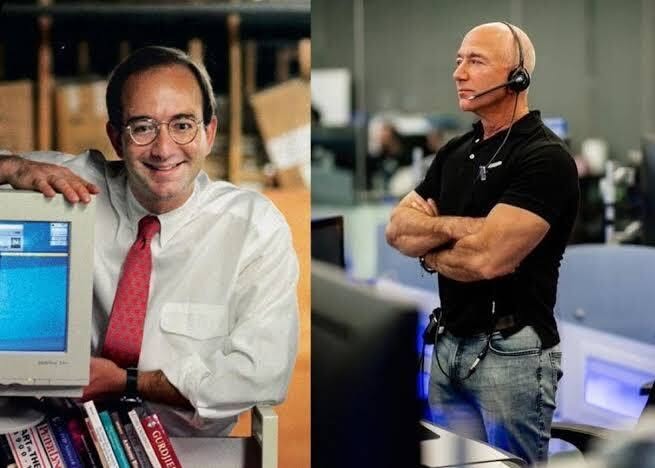
Jeff Bezos is the poster child for this, and it’s public enough that I don’t feel bad using him as the example. Early Amazon Bezos looked like a guy who worked eighteen-hour days behind a desk and skipped the gym for a decade, because he did. The Bezos of the last several years looks like a former Marine who still checks in twice a year to make sure he could pass the PT test if they called him back up. That transformation didn’t happen because he suddenly discovered wealth was health. It happened because he got the wealth first, looked in the mirror, and realized the wealth couldn’t do a single thing about a heart attack.
I heard some version of that story from a dozen different men in that gym over twelve years. Different industries, different net worths, same arc: build the empire, wreck the body doing it, get scared, fix it. The money came before the vitality, not the other way around. Money bought them a personal trainer, a chef, an executive physical with same-week specialist referrals. It bought them access. It did not buy them the discipline that showed up in the gym at 5am regardless.
The Heart Attack That Fixed What Success Couldn’t
I know a guy personally who built his business in his mid-40s and had it humming inside eight years. Somewhere in there he put on twenty-five pounds and picked up high blood pressure the way you pick up a cold, without really noticing until it was a problem. Then one day at the office, it caught up with him. A minor heart attack. Minor enough that he walked out of the hospital under his own power, major enough to scare the hell out of his wife and kids and, more importantly, him.
He did what guys who build businesses tend to do when something threatens the operation: he took control of it. Today he’s in his late fifties, runs marathons, and his business is doing better than it ever did while he was letting himself go. The heart attack didn’t teach him that health is wealth. It taught him that health is the thing that lets you keep the wealth, keep the family, keep showing up.
Where I Fit Into This
Then there’s me. Fifty years old, reasonably fit for my age, doing okay financially, nowhere near wealthy. I wouldn’t be writing this if I’d cracked the code on turning discipline into a fortune. I haven’t. What I’ve got is thirty years of training experience and a body that still does what I ask it to. That’s the trade I made, whether I meant to or not.
The Broke Guys Out-Training the Millionaires
And then there’s the other end of it, the guys the broke crowd points to and says “must be nice.” I know former pro athletes who blew through most of what they made and still train like the call-up could come any day, because the training was never about the money to begin with. I know men who haven’t held a steady job in years, who show up to the park most mornings doing calisthenics, pull-ups on whatever bar they can find, and every so often pick up a class or a one-on-one client for cash. Broke by any bank’s definition. In better shape than half the millionaires I used to share a locker room with.
That’s the part that kills the “I need money to be healthy” excuse dead. The park guy has none of the resources the trophy-wife gym had to offer, and he’s out-training half the members. Discipline doesn’t check your bank balance before it decides to show up.
Your Body Doesn’t Know What a Stock Portfolio Is
Evolutionarily, this tracks. Nothing about a human body evolved to associate physical capability with currency. Strength, endurance, the ability to move well into old age, those were survival traits for a hundred thousand years before money existed in any form we’d recognize. The body doesn’t know what a stock portfolio is. It only knows whether you fed it, moved it, and asked something of it today.
So no, health isn’t wealth. Vitality is the asset that keeps paying out, in every account, for as long as you keep making the deposits. Wealth is just one of the things it can eventually buy you access to, and plenty of men have proven you can have a mountain of the second and none of the first. The reverse is a hell of a lot rarer, and it’s not an accident.
If you recognized yourself anywhere in this, the twenty-five extra pounds, the blood pressure you haven’t checked, the excuse that discipline is a luxury for guys with money, that’s exactly who the Midlife Comeback Plan is built for. Start before the wake-up call finds you instead.
Choose your sore. Everything else follows from there.