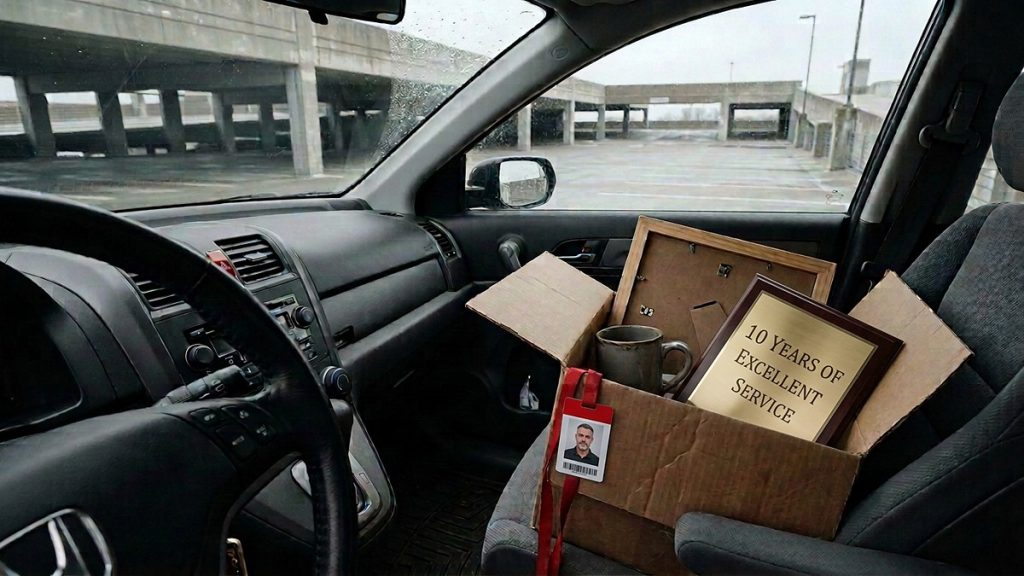
I’ve been laid off twice.
The first time was October 2010. Thirteen months out of work. The second was 2024. Twelve months and a week. I counted.
Both times started the same way. I walked into the office and saw the IT director and the HR guy sitting at a table with a packet. The second time, I knew what time it was the second I saw them. The Three Amigos of Layoffs. They broke the news, walked me through the severance, I signed, and some old co-workers handed me the stuff off my desk on the way out.
Embarrassed. A little relieved. Then the drive home, and the question that doesn’t leave you alone for the next year: now what?
If you’re sitting in that spot right now, this one’s for you. Nobody hands you a manual on how to navigate a layoff. You get a packet, a handshake, and a parking lot. So here’s mine. Not the LinkedIn-polished version. The version I wish somebody had handed me on day one.
The $300 lesson
In 2011 I did what I thought a serious person does. I paid a professional resume writer $300. It came back looking like something a C-suite executive would send. Beautiful fonts, a summary that read like I’d just left a FAANG job, three pages explaining everything I’d ever done.
I sent it out for four months. No callbacks. No emails. Nothing.
Then a recruiter called. After a quick intro he asked me two questions: “Did you pay a service to write your resume?” and “Have people been reaching out to you?” Yes, and no. Not one.
“Yeah,” he said. “A tech manager isn’t going to read all that. They want simple and direct.”
He had me come to his office and we cut it down to the bone. He kept it on file, and that was the last I ever heard from the guy. But the callbacks started. I landed a job that November.
I filed that away as the lesson. Simple and direct. Which is why, fourteen years later, it almost sank me.
The game changed while I wasn’t looking
In 2024 I had a great severance from thirteen and a half years at the same company. I had a part-time job. I was collecting unemployment. I spent three months studying for a certification and “casually” looked for work. I thought I had it made.
Then February 2025 hit. Unemployment ran out and there was no extension this time. The part-time job went out of business. And the certification exam I’d been grinding for, I failed it by one question.
So I did what I should have done in month one. I went from five to seven resumes a week, just enough to satisfy the unemployment office, to five a day. Some weekends, fifteen or twenty. Health IT, regular IT, anything I was qualified for.
I kept my resume simple and direct, like the man told me in 2011. And I got a screening call about once in a blue moon.
So I did what any tech geek would do. I asked ChatGPT. It came back with all this stuff about an ATS, applicant tracking systems, quantifying your job duties, not putting more than fifteen years on your resume. It sounded like gatekeeping BS to me.
It wasn’t BS. It was the new game.
Here’s what nobody tells you: you are not applying to a person anymore. You’re applicant 267 out of 339, and before a human sees a word, software decides whether you’re worth reading. If your resume isn’t built for that software, it doesn’t matter how good you are. You’re gone in seconds. Sometimes you get the rejection email before you’ve closed the browser tab.
Simple and direct was still right. It just wasn’t enough. Now it had to be simple, direct, quantified, and written in the exact language of the job posting. Once I figured that out, and had a recruiter friend confirm it, the screening calls started coming.
That’s the first thing to understand about how to navigate a layoff in 2026: whatever worked for you last time, assume it’s out of date. Do your research before you send a single resume. Better yet, do it while you still have a job. If part of you is quietly hoping the old version of your career comes back, read why wanting your old life back keeps you stuck and then get moving.
What I got wrong, both times
I thought I had time.
Severance in the bank, some savings, an unemployment check. Both times I told myself I’d start looking “after the holidays.” Both times the market didn’t care about my runway.
Start aggressively on day one. Not because you’re panicking, but because it’s a two-to-three-month process even when it goes well, and you don’t know what’s coming. I got ghosted for five weeks by a NASA contractor after two interviews before they emailed to say they’d hired somebody else. Third time that happened. You cannot afford to be relaxed about this.
And one more thing I got wrong for twenty years: I thought my education and experience would carry me. They help. They’re not enough. The market gets fiercer every year, and if you’re over 45, some 28-year-old HR coordinator is quietly wondering whether you’re a “culture fit” or “too expensive,” even when you’re the most qualified person in the stack. That’s why they tell you to keep the resume to fifteen years. It’s not fair. It’s the game. Play it.
Losing the title hurts more than losing the paycheck, and most guys won’t say that out loud. If the job was carrying your whole identity, that’s a separate fight worth understanding: what a midlife identity crisis actually is.
How to navigate a layoff: my rules for the first 30 days
This is what actually worked. In order of importance.
1. Take care of yourself first. Rest, exercise, eat. Your health is your most important asset, and it matters more under stress, not less. The company that let you go couldn’t care less about your well-being. So you have to. If you need the argument spelled out, I made it here: why health is more important than wealth.
2. Tell your wife first. Married guys, this is a pivotal moment in your marriage and it can make or break you. She should be the first person to hear how you’re actually feeling and how she can help. She’s on your team. Relationships are built to carry each other through exactly this.
Single guys: stay your ass away from dating right now. Your aura is off. It’s not attractive. You’ve got bigger things to handle. I wrote a whole piece on that trap here: dating while unemployed over 50.
3. Wake up grateful, go to sleep accomplished. Every morning, write in a gratitude journal. Every night, write down three to five goals for tomorrow. Didn’t finish one? Carry it over. Don’t drop it. This one habit kept me sane for a year.
4. Keep one thing that’s yours. For me it was the gym. Whatever it is for you, keep doing it. Don’t lose yourself in the BS. Nobody’s checking your calendar anymore, which is exactly why discipline matters more after 40, not less.
5. NETWORK. Seriously. Talk to everyone you know. Where do they work? Are they hiring? What for? They may not know anything, but they might know a guy who knows a guy. I got my current job through networking, not a job board. Switch on “Open to Work” on LinkedIn. Post old stories and pointers from your expertise once or twice a week. You never know who’s watching.
6. Gather every resource you can. File for unemployment the week you’re let go, not the month after. The Department of Labor’s unemployment insurance page will point you to your state’s program. Then call every creditor and tell them you’re unemployed. Some have insurance that pauses payments. Defer student loans. Ask your mortgage company or landlord what programs they have, and check the CFPB’s housing assistance resources before you assume you’re stuck. Find side income. Use your skills first, but DoorDash is fine if that’s what it takes. Idleness is the enemy. The more you move and can be seen, the more likely you land.
7. Volunteer. You’ll feel like a person again, and you may meet the person who hires you.
8. Take one day off from all of it. Job hunting will burn you out fast. One day: reconnect with your family, your environment, yourself. Forget the search exists. F*** the job search, just for one day.
On interviewing
Prepare. Do what you have to do. Then walk out and forget about it. Don’t replay it. Don’t decide you nailed it or bombed it. Follow up once, then on to the next.
You will be rejected within minutes of applying. You’ll be ghosted. You’ll be told you’re a top candidate and then watch them hire someone else. It’s almost like dating. Don’t take it personal.
And remember: they’re looking for the best candidate the same way you’re looking for the right job. Walk in like you’re the best, even when it wobbles. Skills can be learned. A great personality is hard to come by.
Study every company you talk to. Find people who work there on LinkedIn, get a feel for the culture, and ask yourself honestly if you’d fit. Then show them you would. Be adaptable.
The day I stopped waiting on somebody else
Somewhere around that five-week NASA ghosting, I said something out loud in my kitchen: I will never again rely on income that’s outside my control.
I didn’t start Midlife Brotherhood out of desperation. I started it because I needed something purposeful to do instead of sulking about being unemployed. I built a website. I wrote The Midlife Comeback Plan. I marketed it in the gaps between applications. It made a few bucks. Groceries, gas, not a living. But it kept me focused on something I owned.
That’s the real lesson under all the others: go in knowing you’re replaceable, and so is that job. Do what’s best for you and your family, because these companies don’t care. And when you land, and you will, never get complacent again. Keep your resume out there. Take a couple of interviews a year. Build something that’s yours.
This is a new beginning
It’s going to be hard. And you’re going to be okay.
You’re about to learn things about your life that you never noticed before. I hope you grow from it. If you’re a student of life, you’ll pass this with flying colors. That’s how to navigate a layoff without losing yourself inside it: you treat the year as tuition, not punishment. The mindset work that gets you there is the whole point of The Comeback Code.
I built something to help, too. It’s the tool I wish I’d had in 2011 and again in 2024: a resume builder that gets past the ATS and reads well to a human, a two-minute cover letter, an interview cheat sheet with your five stories, and the exact first-30-days checklist above. All in one file, all free, nothing to install, and nothing leaves your computer.
Get the free Layoff Comeback Kit. Join the Midlife Brotherhood newsletter and it’s in your inbox in a minute.
Get the free Layoff Comeback Kit
Layoff questions I get asked most
What should I do in the first week after being laid off?
File for unemployment immediately, tell your spouse or your closest person before you tell anyone else, and rebuild your resume for applicant tracking software before you send a single application. Most guys burn the first month applying with a resume that was never going to get read.
How long does it take to find a job after a layoff?
Plan for two to three months minimum even when everything goes right, and understand it can run far longer. My first layoff took thirteen months. My second took twelve months and a week. Budget your severance and your energy against the long version, not the optimistic one.
Why am I not getting callbacks on my resume?
Usually because software rejected it before a human opened it. Keep it to one or two pages and roughly fifteen years of history, quantify your results with real numbers, and mirror the exact wording of the job posting. A beautifully designed resume that doesn’t parse is worse than a plain one that does.
How do you navigate a layoff in your 40’s and 50’s when age is working against you?
Cut the resume to your last fifteen years, lead with results instead of tenure, and work your network hard, because referrals skip the screen that ages you out. Experience is still an asset. It just has to be packaged for a system that was not built with you in mind.
Should I be dating while unemployed?
If you’re single, no. HELL NO, not right now. Your energy is off, and people read it instantly. Get your footing back first, then go be interesting again.
Good luck, brother. Now go. Idleness is the enemy.
-Billy